Does curl type matter?
Love You Curls

Does knowing your curl type actually matter? Mholweni!
This is a question that has literally plagued me for a long time, and I am sure it has likely crossed the minds of many natural hair enthusiasts. Let’s explore the significance, or perhaps lack thereof, of identifying your curl type (or pattern) in the realm of natural hair care. We will also touch on different ways to care for South African 4c hair particularly
Understanding your curl type can be a fun and exciting aspect of embracing your natural hair journey. It’s like discovering the unique fingerprint of your curls, and it can help you connect with a broader community of curlies who share similar hair textures. However, it’s essential to recognize that knowing your curl type is just one small piece of the puzzle in the grand scheme of natural hair care.
First things first, we need to understand that natural hair comes in an incredible array of textures and patterns, from loose waves to tight coils and everything in between. No one curl type is better than the other. Our hair is as diverse as the people who rock it. Embracing this diversity allows us to celebrate the beauty of our individuality and appreciate the uniqueness of our curls, regardless of the classification.
Knowing your curl type can provide a general idea of how your hair may behave, but it’s crucial to remember that each person’s hair is different. Hair care needs can vary greatly from one individual to another, even within the same curl type category. While it’s useful to gain insight into your hair’s tendencies, it shouldn’t dictate your entire hair care routine.
Instead of solely obsessing over curl types, prioritize the overall health of your hair. Healthy hair is the foundation for achieving and maintaining your best curls, regardless of the pattern. Nourishing your strands with proper hydration, moisturization, and protective practices will yield excellent results, regardless of your curl type.
Knowing your curl type or pattern can be an enjoyable part of your natural hair journey, but it doesn’t define your hair’s needs or determine the success of your hair care routine. Embrace your curls, celebrate your individuality, and prioritize the health and happiness of your hair. Remember, it’s not about fitting into a specific mold—it’s about embracing your natural beauty, one curl at a time.
Let’s dive into the wonderful world of African hair and understand the unique characteristics of the 4C hair type which majority of us down south tend to have. If you’re unfamiliar with the term, 4C refers to a specific curl pattern and texture commonly found in African hair.
It’s important to dispel a common misconception. Despite its appearance, 4C hair is not rough or inherently strong. In fact, due to the tight curls and coils, it can be quite fragile if not handled with care. The bends and twists in the hair strands are actually the weakest areas, prone to breakage and damage.
Note that hair within the same or similar curl pattern tends to behave similarly in that they have common tendencies, however, no one curl type is the same as there are many different elements that contribute towards your hair’s growth rate such as breakage, and porosity to name a few. Now, let’s focus specifically on 4C curl type.
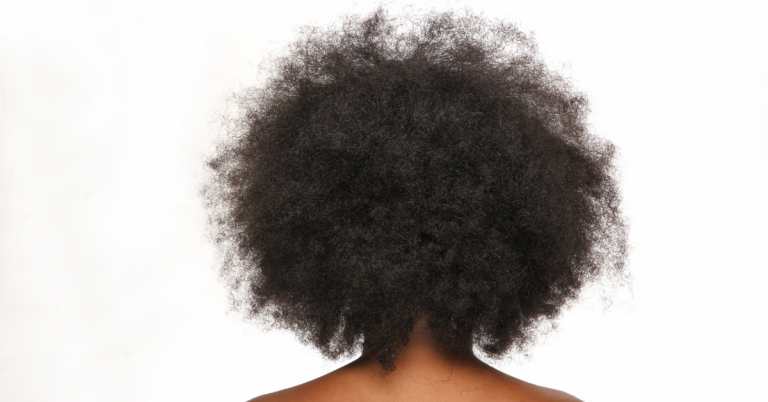
This hair type has tight, coily curls that often resemble a “spring” (have a look at the springs holding your Television remote batteries in place). It could either have high density, meaning there are a lot of hair strands packed together on the scalp, medium density, or low density. Additionally, 4C hair can be prone to dryness, shrinkage, and is very fragile making it crucial to adopt a proper hair care routine.
Here are a few similar characteristics:
Shrinkage
One of the most celebrated and sometimes challenging aspects of 4C hair is its significant shrinkage. 4C curls have a remarkable ability to coil and contract when exposed to moisture or humidity. As a result, the hair may appear much shorter than its actual length when dry. Embracing this shrinkage is an essential part of accepting and appreciating 4C hair’s natural beauty however remember that the constant expanding and contracting of the hair can put a lot of stress it, leading to breakage, especially during styling or detangling.
The tight coils of 4C hair can be delicate and easily prone to tangling and knotting. When hair tangles, it becomes more vulnerable to breakage when attempting to detangle it, especially if not done gently and with patience.
Fragility
Due to the tight curl pattern, 4C hair can be more susceptible to breakage and damage if not handled with care. This fragility necessitates gentle detangling methods, such as finger detangling or using a wide-tooth comb, to minimize breakage and preserve hair health.
Because of its tight curl pattern, 4C hair often struggles with retaining moisture. The natural oils produced by the scalp (Sebum) serve as a protective layer for the hair and have a difficult time traveling down the hair shaft due to the tight coil pattern of 4C hair, leaving the ends more susceptible to dryness and brittleness. Dry hair is more prone to breakage, split ends, and overall damage.
Versatility
While 4C hair is often described as “the most challenging” to manage, it is essential to reframe this perspective. 4C hair is incredibly versatile, capable of holding various styles, from intricate updos to defined twist-outs and braid-outs. Embracing this versatility allows for creativity and expression in styling options.
Moisture Needs
Like all natural hair types, 4C hair craves moisture to thrive. Regular deep conditioning, leave-in treatments, and the L.O.C. (liquid, oil, cream) method are excellent ways to keep 4C hair well-hydrated and nourished.
As with any curl pattern, individual variations within the 4C hair type are abundant. Hair porosity, thickness, and texture can differ greatly from person to person, even within the 4C category. Embracing these differences allows for a tailored hair care approach that suits each unique individual.
To care for your 4C hair effectively, here are a few tips:
- Moisture is key: Hydrate your hair regularly using water-based moisturizers and leave-in conditioners then seal in that moisture with an oil and cream. Have a look at the Ayuverdic infused hair oil and shea butter – these work wonders for my hair to combat dryness and promote healthy hair growth.
- Gentle detangling: Use your fingers or a wide-toothed comb to detangle your hair. Start from the ends and work your way up to minimize breakage – and BE PATIENT. Try not to break your hair or pull it apart, rather work patiently to untangle your knots.
- Protective styling: Consider hairstyles like braids, twists, or updos to protect your hair from external factors that can cause damage. Remember to avoid styles that put excessive tension on your scalp, especially your hairline. Personally, I always opt for natural hairstyles like twists or plaits (amaflerho/amaBanky) compared to adding extensions to avoid the extra weight on my hair, consider this especially if you have weak or brittle hair.
- Nighttime routine: Cover your hair with a satin or silk bonnet or use a satin pillowcase while you sleep, you know I have been preaching a durag on social media for the longest time. This helps retain moisture and reduces friction, preventing breakage.
Remember, everyone’s hair is unique, so it’s essential to experiment with different products and techniques to find what works best for you. Embrace your beautiful 4C hair and enjoy the journey of discovering what it needs to thrive!
With love, Likho